

The complexity quagmire and how it costs time and money
Endless meetings and bureaucratic tasks drain productivity, costing companies millions and pushing top talent to quit—here’s the data proving it.



How many of us have sat in endless meetings or carried out bureaucratic tasks, rolled our eyes, sighed and got on with it? The experience of millions of employees at work in the UK and elsewhere is that of spending a good portion of their working lives in humdrum, mundane activity that adds no value.
Is there data or evidence to show how much time is spent in such activities? Well, yes.
A study published in the Harvard Business Review found that executives spend an average of nearly 23 hours a week in meetings, up from 10 hours in the 1960s. Another study by CIPD in 2023 revealed that 70% of meetings keep employees from doing productive work. The pandemic did reduce the average length of meetings by 20%, but the number of meetings attended by workers increased by 13.5%.
Research from Temple University published in the Journal of Management explored the effects of wasting employees' time at work. The study found that employees feel frustrated and engage in counterproductive behaviours when they perceive their time is being wasted. Another study by Harvard Business Review involving over 7,000 readers showed that bureaucratic drag slows work down, wastes time, stifles innovation, and causes employees to focus too much on internal matters rather than their customers
Back in 2017-18, I and colleagues at Karian and Box conducted a study with 3 large multi-nationals on the time employees spent at work undertaking unproductive tasks. This was spurred by an in-depth analysis we undertook for a large financial services that wanted to tackle bureaucracy and complexity in its operations.
The analysis across the three businesses sought to highlight levels of unproductive activity, and was based on self-reported survey feedback by employees. As such, given the common under-reporting of negative personal behaviour, the results of this study were very much likely to be at the conservative end of estimated time lost to low value activity.
The average proportion of time reported lost was calculated based on a 35-hour week. And the finding?
Within the three business’s UK operations alone, the study found that, on average, 20% of employees said they lose 3 hours or more in unproductive activity each week. This would equate to the loss of nearly £182m in unproductive activity by employees in those three businesses each year. More senior leaders (C-suite -1 and -2 levels) reported much higher levels of unproductive meetings and activity – an average of 31% per week spending 3 hours or more.
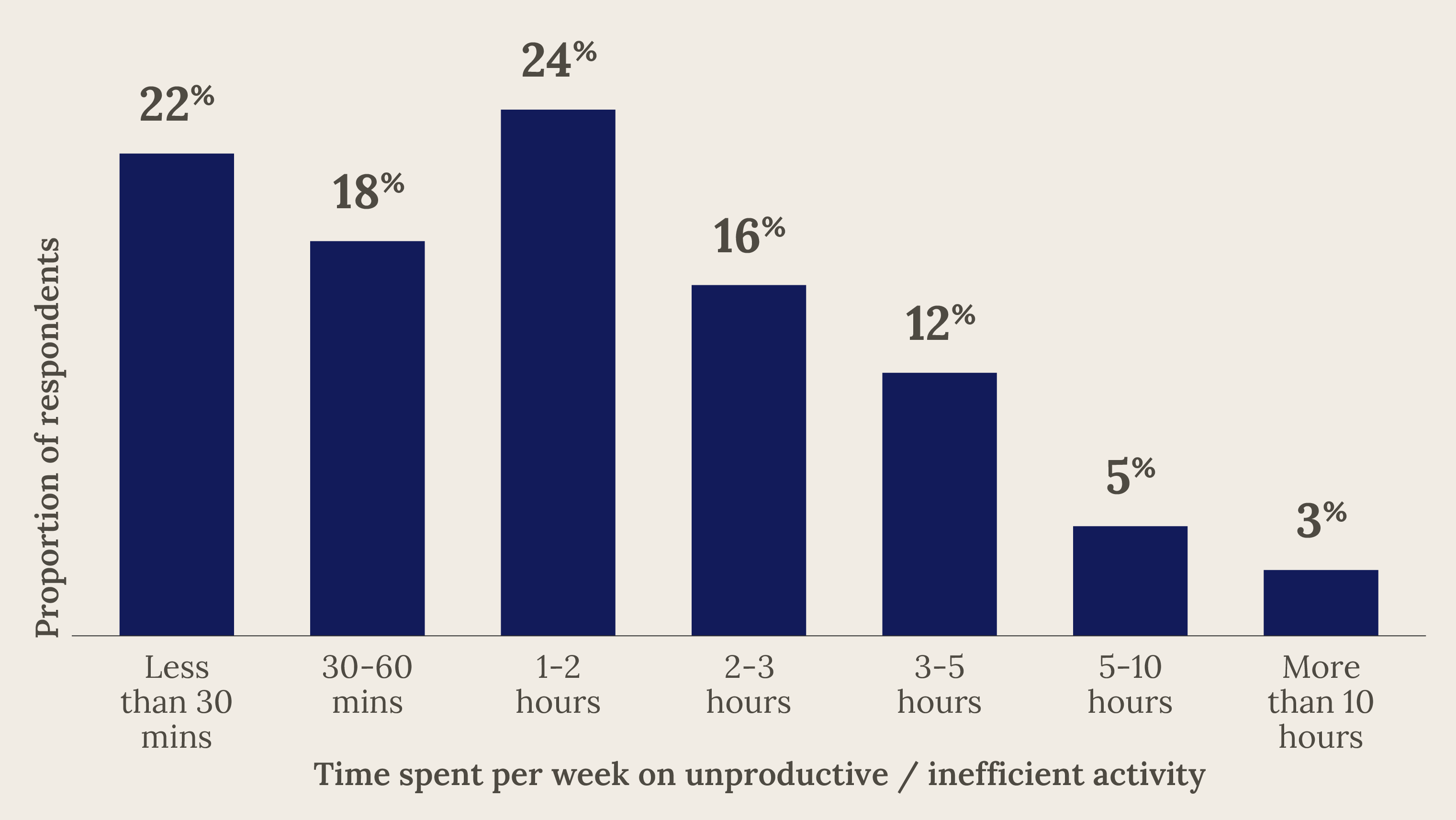
Unnecessary meetings are costing employers millions (if not billions) in unproductive time and, at the same time, making their employees’ working lives more tedious and less fulfilling.
In the same Karian and Box studies, we were also able to assess the impact of complexity in UK workplaces across these businesses.
Innovation and pace of decision making
One of the first things that we identified – unsurprisingly – is that complex, bureaucratic workplaces kill innovation and slow down decision making.
Our analysis showed that there is a direct link between employees’ experience of bureaucracy / and their experience of innovation at work. Those who are most likely to say they experience high levels of bureaucracy see far fewer innovation-related behaviours.
Other analysis across these businesses also found that organisational ideas adoption, measured by the statement correlated strongly with other drivers of complexity such as disempowerment.
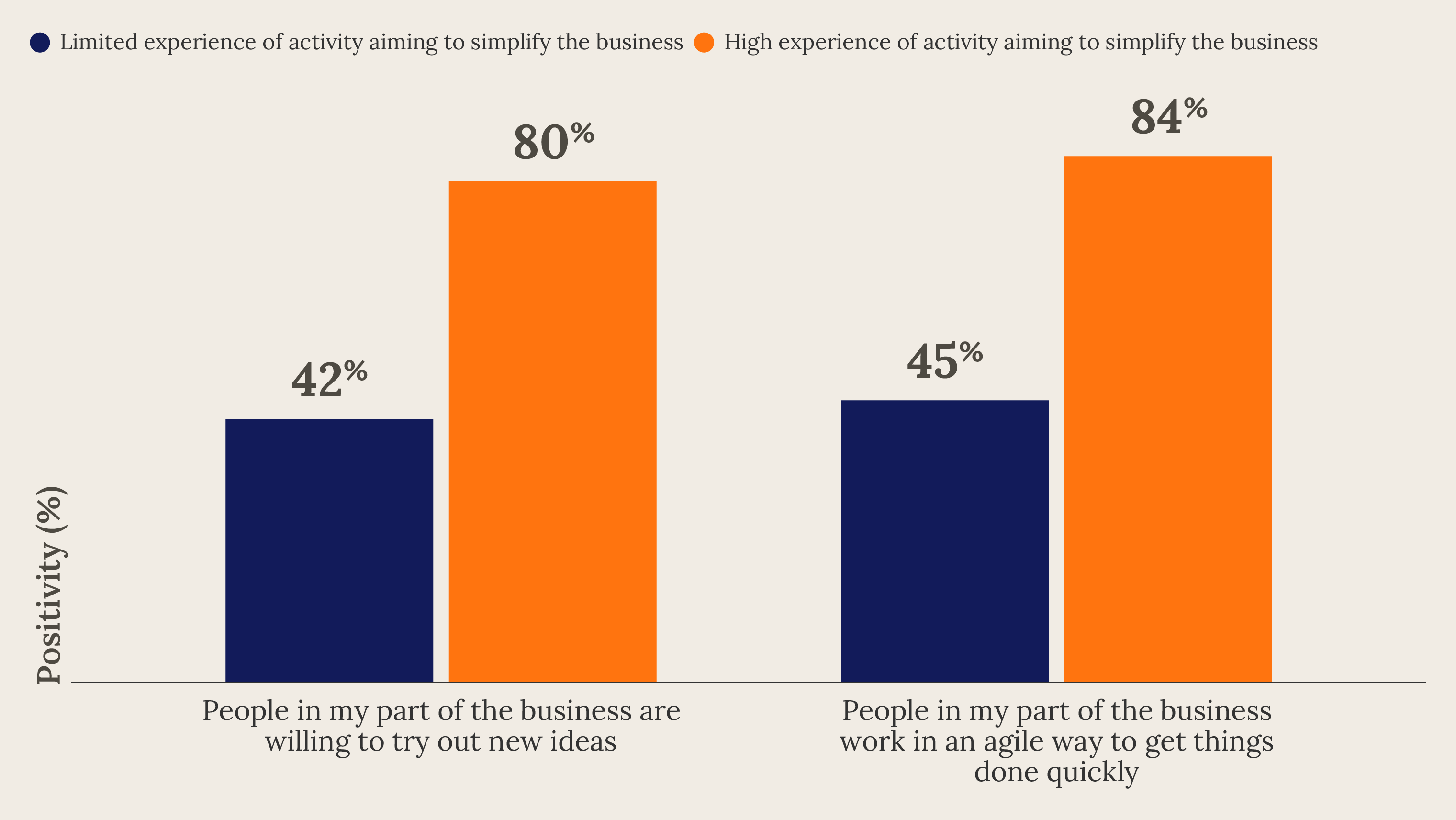
Complexity frustrates talented employees – and nudges them to want to leave
The study across the three businesses showed that employees who experienced complexity are much more likely to say they plan to leave their employer sooner.
The pattern emerged among those employees who had been rated most positively in their performance review over the previous 12 months. High performers experiencing limited complexity were nearly 20 points more likely to say they plan to stay at their employer for more than two years (compared with those who are experiencing high levels of complexity).
This shows, yet again, the importance of tackling organisational complexity if you want to talented people to stick around, drive innovation and deliver more productive, profitable business.